Grow Your Recruitment Business with this.
Many recruitment companies are in defensive mode.
Plenty are shrinking.
But it is in tough times that nimble businesses set the scene for growth.
Is now your time?
Scaling a recruitment business isn’t about working harder. Hard work is a given. It’s about working toward a plan and setting the right priorities. I’ve seen too many businesses fail to meet their goals because they lack focus, take on the wrong clients, or ignore key performance metrics.
To scale successfully, follow this guide.
However, note that this blog is just my contribution to a substantial handbook. I am only one of 12 ‘experts’ who have given their tips for business growth.
The A-Positive guide to scaling a recruitment business
And you can have it free here.

First, my thoughts on scaling
1. Set Clear Goals and Execute Relentlessly
What’s one of the biggest mistakes recruitment businesses make? No clear plan. I’ve worked with countless owners who “work hard” but have no structured roadmap. Growth doesn’t happen by accident; it happens through deliberate action. Start with a three-year vision, but don’t stop there. Break it down into 100-day sprints with clear, measurable targets. Ask yourself, What does success look like in 12-18 months? Set your goals. Commit to them. And execute with discipline. Strategy is important. But implementation is the big differentiator.
2. Know Your Numbers—They Tell the Truth
It has been my growth mantra for decades: You cannot manage what you do not measure. There are many critical metrics every scaling recruitment business must track. Start with these, but others also require attention. For more details on this, see my blog here
Or get a demo from Kamal. It is a genius tool for delivering your key metrics and ratios in real-time. Chat to Guy Day if required
● Average Placement Fee: If it’s too low, you need to adjust your pricing or focus on higher-value roles.
● Temp Margin % Monthly Trending. Even a small amount can add up to big dollars over your entire temp business. Find out why and address it
● Gross Profit/Staff Member. A clear income productivity number
● Management and staff costs/ all Gross profit. Under 50% is good. The real concern is 65% and above
● Ebit/ Gross profit. What is our profit out of every dollar of GP
● Debtor days. Under 30 and hold it there
● Total Expenditure per staff member
● Profit per staff member. The ultimate productivity measure
● Candidate Referral to Client Interview Ratio (CCI): If candidates aren’t making it past the referral, refine your screening and matching process.
● Client Interview to Placement Ratio – If interviews aren’t leading to placements, either you’re recommending the wrong candidates, or you have not qualified and understood the brief.
● Job Order to Placement Ratio: Too much work done by recruiters goes unpaid. Taking every job order is not a sign of success. Taking the right ones and converting them into placements is important.
Track these constantly, and you’ll find the problems so you can act and maintain growth
3. A Commission Plan That Motivates, Not Frustrates
A weak commission plan kills motivation. If recruiters feel underpaid, they won’t stick around. If it’s too generous, your business suffers. The best structures are fair, motivating and aligned with your company culture. However, don’t just copy another firm. You need to build a structure that works for you. (For more information, go here )
4. Work with Clients Who Value You
Not every client is a good client. The best ones:
● Move fast
● Value expertise
● Are responsive and take your advice
● Pay fair fees without endless negotiations
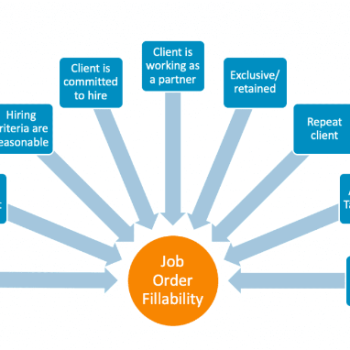
The worst ones haggle, delay decisions and treat you like a CV factory. Here’s the truth—saying “no “to bad clients is one of the smartest moves you can make. These may be clients who are asking for fee slashes or going rogue in the recruitment process, especially by handing out orders to multiple agencies. Explain to them why working with you is in their interest and ask them to work as a partner
5. Build a team sales ethos
Recruitment is a sales business. It’s much more than that, too, but business development and opening new doors are built in. Scaling requires a culture where everyone understands the importance of selling. This doesn’t mean aggressive tactics, but instead focuses on:
● Building relationships
● Finding opportunities
● Communicating your value with confidence
If your recruiters aren’t comfortable selling, your business will stagnate.
6. Stay Adaptable—Or Get Left Behind
The recruitment industry moves fast. The strategies that worked last year might not work tomorrow. The most successful firms embrace change by:
● Investing in technology to automate where it makes sense.
● Train their teams relentlessly.
● Innovate before the market forces them to.
If you’re not constantly learning, adapting, and improving, you’re falling behind.
Final Thought: Scaling Is About Working Smarter, Not Harder
You don’t need to burn yourself out to scale. Instead, focus on these fundamentals:
● Set clear and measurable goals
● Track the correct numbers
● Reward your team fairly
● Work with the right clients
● Embed a sales culture
● Adapt to market changes quickly
Focus on these fundamentals consistently, and growth won’t just be a possibility; it’ll be an inevitability.
Get the complete guide. 25 pages of golden advice

*****************************************************************************************************************************************************************************************

Free webinar! Sign up now
*************************************************************************************************************************************************
- Posted by Greg Savage
- On October 13, 2025
- 0 Comment